Christmas Bird: A Designer’s Review for Branded Merch
As an embroidery designer who has spent years digitizing and reviewing files for commercial use, I approach every new machine embroidery design with a critical eye. It is not enough for a design to simply look cute on a screen; it must perform under the needle, hold up to wear and tear, and elevate the brand identity of the business using it. Today, I am reviewing Christmas Bird, a festive digital asset that promises to help creators produce adorable holiday gifts. For small business owners, Etsy sellers, and boutique decorators, understanding how this design translates from a digital embroidery file to a tangible finished product is crucial for maximizing return on investment.
First Impressions and Visual Personality
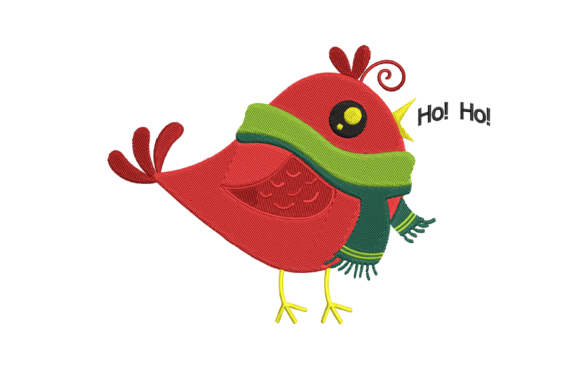
The initial appeal of Christmas Bird lies in its ability to balance festivity with approachability. In the world of holiday merchandising, designs often fall into two traps: they are either too generic or overly complex. This design appears to steer clear of both, offering a visual personality that is playful yet polished. For a handmade brand or a local creative studio, this aesthetic is invaluable. It feels less like mass-produced clip art and more like a thoughtful, handmade product accent.
When evaluating the design for commercial embroidery projects, the first thing I look for is clarity. Does the silhouette read well from a distance? For small business merch like tote bags or aprons, the design needs to be recognizable even when viewed quickly by a customer walking past a market stall. The "adorable" nature described in the product details suggests soft curves and friendly proportions, which are excellent for building emotional connections with buyers. However, cuteness must not compromise professionalism. The lines appear clean, suggesting that with proper digitizing, the stitch flow will be smooth rather than jagged or chaotic.
Real-World Applications for Small Businesses
The versatility of Christmas Bird makes it a strong candidate for various applications beyond simple greeting cards. Let us explore how this design can be integrated into a cohesive branding strategy for different types of businesses.
- Embroidered Patches: This is perhaps the most lucrative application. A well-executed patch featuring Christmas Bird can be sold as a standalone item or used as a value-add for clothing purchases. Patches allow customers to customize their own gear, increasing engagement.
- Staff Uniforms and Aprons: For bakeries, florists, or cafes launching holiday specials, embroidering this design on staff apron embroidery or chest pockets creates a unified, festive team look. It signals to customers that the business is engaged with the season without being overpowering.
- Cap Embroidery: Placing the bird on the side panel or back of a cap offers a subtle branding opportunity. It is less intrusive than a full-front logo but adds a premium, custom touch to headwear.
- Tote Bag Design: Holiday shoppers love reusable bags. A centered or corner-placed Christmas Bird on a canvas tote turns a functional item into a seasonal accessory, extending the life of your brand visibility long after December 25th.
For Etsy sellers and crafters, this design serves as a key design asset. It can be used to create coordinated sets, such as matching ornaments and tea towels, which increases average order value. The key is consistency; using the same motif across different custom apparel and home goods reinforces brand recognition.
Technical Considerations and Production Challenges
While the aesthetic is promising, the technical execution determines whether Christmas Bird succeeds or fails in production. As a designer, I advise caution in several areas before running a full batch.
First, consider stitch density. Festive designs often rely on solid fills to create vibrant colors. If the density is too high, the fabric may pucker, especially on lighter materials like cotton tote bags or thin shirt fabrics. Conversely, if the density is too low, the backing material may show through, ruining the professional look. Always request a test stitch-out on the actual fabric you intend to use.
Second, evaluate the thread colors against your base material. The description mentions multiple file formats, which is essential for adjusting color stops. If you are embroidering on dark uniforms, ensure the design has sufficient contrast. A dark bird on a navy jacket will disappear. You may need to adjust the palette or add a white underlay to make the Christmas Bird pop.
Third, pay attention to hoop size constraints. Not all machines have large hoops. If you plan to use this on large items like blankets, ensure the design scales up without losing definition. Pixelation or jagged edges become obvious when a small design is enlarged. Check the included files to see if a larger version is provided or if the design is optimized for standard 4x4 or 5x7 hoops.
Finally, consider the stabilizer requirements. Curved surfaces, such as caps or sleeves, require cut-away stabilizers to prevent distortion over time. Washable items need stabilizers that dissolve or tear away cleanly without leaving residue. Neglecting this step can lead to a stiff, uncomfortable finished product that customers will not wear twice.
Enhancing Brand Identity and Customer Trust
Using a high-quality design like Christmas Bird does more than decorate a product; it communicates values. A crisp, well-stitched embroidery signals attention to detail. For small businesses, this builds trust. Customers associate the quality of the embroidery with the quality of the service or primary product. A sloppy stitch job can undermine a premium brand, while a flawless embroidered patch can elevate a simple t-shirt into a collector's item.
Furthermore, seasonal designs create urgency and emotional resonance. By integrating Christmas Bird into your holiday collection, you tap into the nostalgia and joy of the season. This emotional connection drives buyer engagement. When customers see a cohesive look across your printable mockup marketing materials and the actual physical goods, it reinforces professionalism. It shows that you have invested in proper design assets rather than relying on free, low-quality graphics.
Practical Designer Notes for Implementation
Before committing to a large production run, follow these steps to ensure success with Christmas Bird:
- Test in Black and White: Print or stitch the design in monochrome first. This reveals any issues with spacing or detail clarity that color might hide.
- Check Small Patch Viability: If you plan to make small pins or badges, verify that the details do not merge together. Simplify if necessary.
- Review Thread Contrast: Ensure your chosen thread colors stand out against the fabric texture. Test on both light and dark fabrics.
- Confirm Commercial Licensing: The product description states it comes with multiple file formats, but always double-check the license terms. Ensure you have the right to sell items made with this machine embroidery design.
- Create Client Mockups: Use digital tools to place the design on various products before stitching. This helps clients visualize the final result and reduces revision requests.
In conclusion, Christmas Bird offers significant potential for small business merchandise. Its festive charm, combined with proper technical execution, can enhance brand identity and drive holiday sales. By respecting the limitations of fabric texture, hoop size, and stitch density, you can transform this digital file into a profitable, professional-grade asset for your embroidery business.